Why Thousands of Americans Trust CarShippingHub to Ship Their Vehicles
Shipping a car across the country shouldn’t feel like a gamble. But for most people, it does. You Google “how to ship a car,” fill out one form, and suddenly five companies are calling your phone before you’ve even finished your coffee.
We started CarShippingHub to fix that. As a team with over two decades of combined experience in the auto transport industry, we saw the same problems repeat year after year: shady brokers, opaque pricing, fake reviews, and consumers who had no way to tell a legitimate carrier from a scam operation.
So we built a platform that puts information first. Every tool on this site is free, every carrier in our directory is verified against federal FMCSA safety records, and every estimate uses real-time data — not guesswork.
How Car Shipping Works — Plain and Simple
If you’ve never shipped a vehicle before, the process is simpler than you think. Here’s exactly how it works, step by step:
Get a Quote
Use our free shipping calculator to get an instant cost estimate. Just enter your origin, destination, and vehicle type. Our system calculates pricing using live fuel data and actual driving distance from Google Maps.
Book with a Verified Partner
When you’re ready, we connect you with a single, FMCSA-licensed transport broker — not a bidding war of random companies. Your quote covers pickup, transport, delivery, and insurance. No hidden fees, no bait-and-switch.
Track & Receive
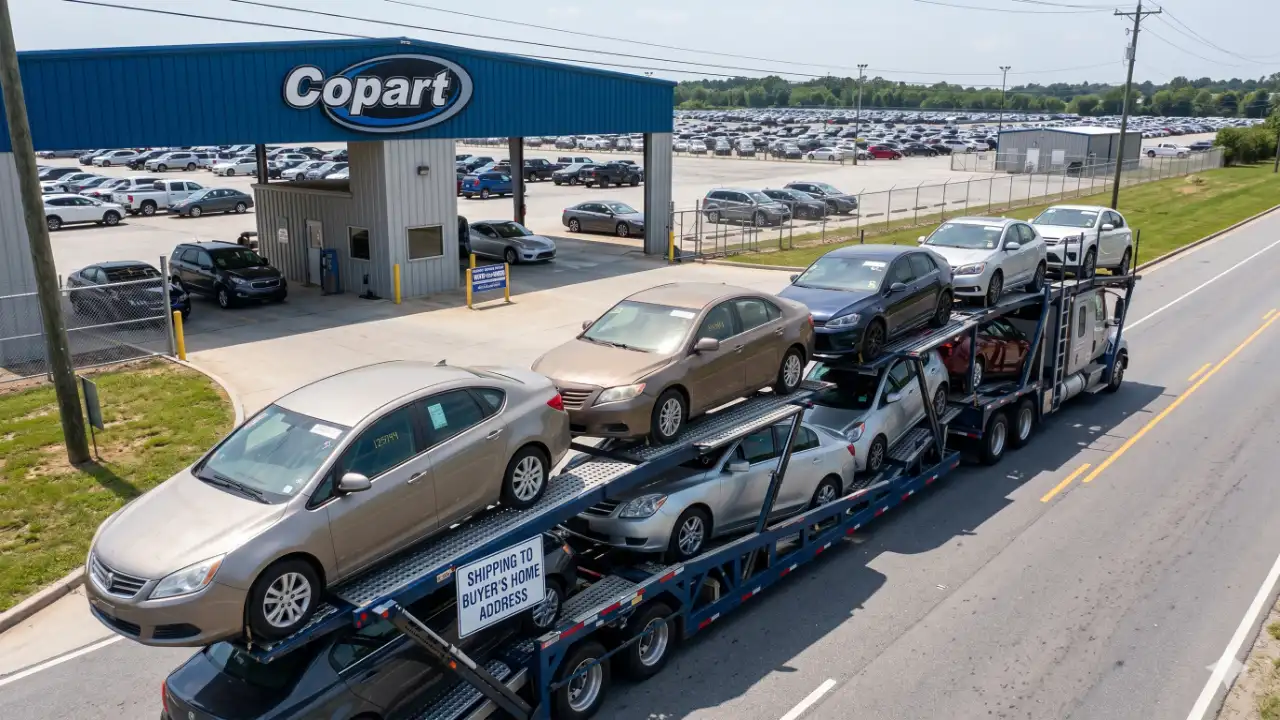
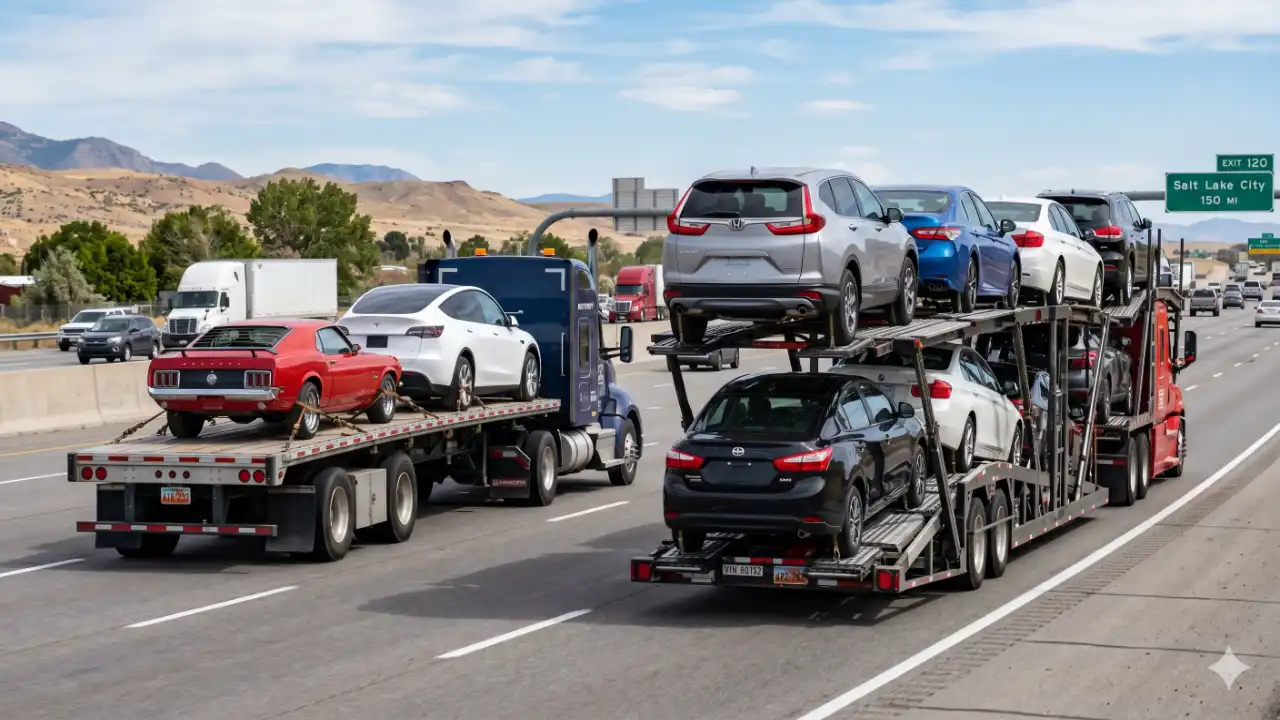
A licensed carrier picks up your vehicle on a multi-car hauler and delivers it to your door. Transit time depends on distance — typically 1–3 days for short hauls and 7–10 days coast-to-coast. You’re kept informed throughout.
What Does It Cost to Ship a Car in 2026?
This is the number-one question we hear. The answer depends on distance, vehicle size, transport type, and time of year. But here are the real-world averages based on current market data:
| Distance | Open Transport | Enclosed Transport | Avg. Transit Time |
|---|---|---|---|
| Under 500 mi | $350 – $700 | $500 – $950 | 1–3 days |
| 500 – 1,000 mi | $600 – $1,000 | $800 – $1,350 | 3–5 days |
| 1,000 – 1,500 mi | $750 – $1,200 | $1,000 – $1,600 | 4–6 days |
| 1,500 – 2,500 mi | $900 – $1,400 | $1,200 – $1,900 | 5–8 days |
| 2,500+ mi (Coast-to-Coast) | $1,000 – $1,700 | $1,400 – $2,300 | 7–10 days |
Prices reflect standard sedan rates. SUVs, trucks, and oversized vehicles typically cost 10–25% more.
Most Popular Auto Transport Routes in the U.S.
Certain shipping corridors are busier than others, which often means more carrier availability and better pricing. Here are the routes we see the highest volume on:
| Route | Distance | Avg. Cost (Open) | Why It’s Popular |
|---|---|---|---|
| California → Texas | ~1,400 mi | $750 – $1,100 | Massive relocation corridor |
| New York → Florida | ~1,280 mi | $700 – $1,050 | Snowbird season staple |
| California → New York | ~2,800 mi | $1,100 – $1,600 | Coast-to-coast high demand |
| Illinois → Florida | ~1,200 mi | $650 – $1,000 | Midwest-to-south migration |
| Texas → Washington | ~2,100 mi | $950 – $1,400 | Military & tech relocations |
Don’t see your route? No problem — we cover all 50 states. Browse all shipping routes or get a quote for your exact route.
Open Carrier vs. Enclosed Carrier — Which Is Right for You?
This is the second most common question we get, and the answer is usually straightforward:
Open Carrier
- Most common method (90%+ of shipments)
- Vehicles ride on a multi-car hauler
- Exposed to weather and road debris
- Most affordable option
- Best for: Daily drivers, standard cars, budget-conscious shippers
Enclosed Carrier
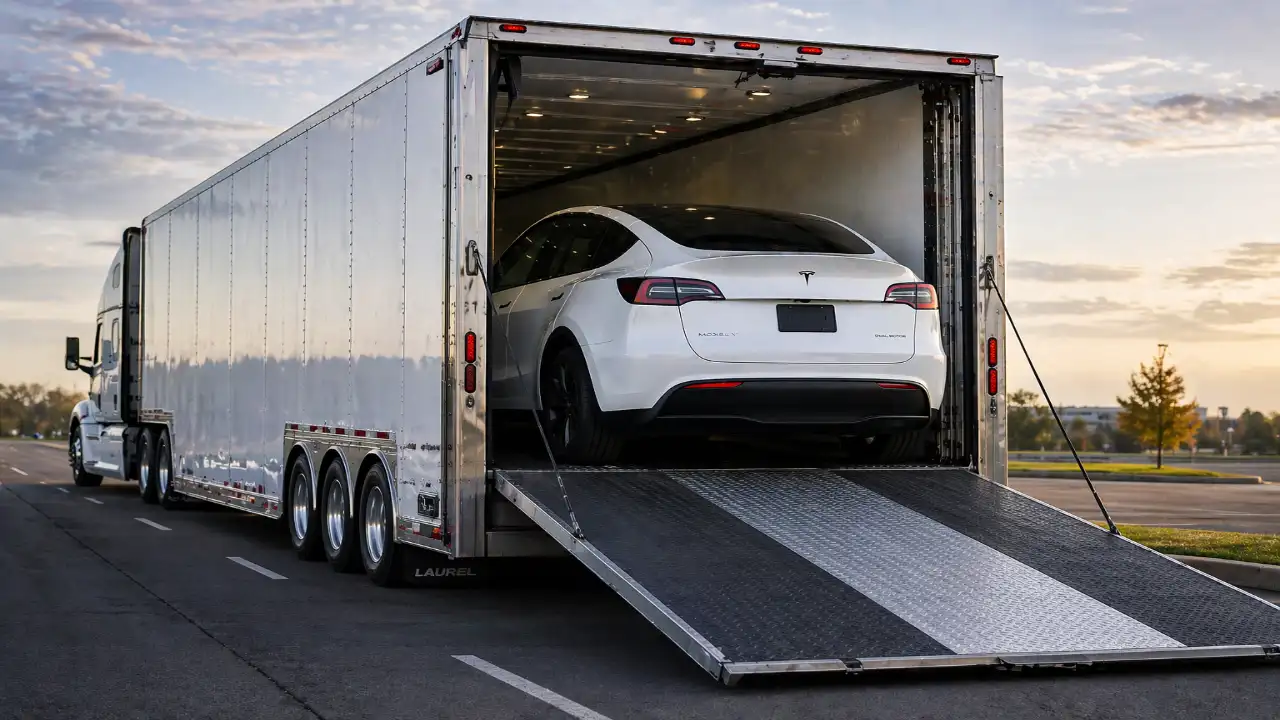
- Fully covered trailer protection
- Shields from all weather and debris
- Costs 30–40% more than open
- Limited carrier availability
- Best for: Luxury, classic, exotic, and high-value vehicles
Our honest take? If your car is a regular daily driver worth under $50,000, open transport is perfectly safe. Tens of thousands of vehicles are shipped on open carriers every single week without incident. Reserve enclosed for vehicles where a paint chip would genuinely ruin your day.
8 Things Smart Shippers Always Do
After handling thousands of vehicle shipments over the years, we’ve noticed a clear pattern: the customers who have the smoothest experience always follow these rules.
- Verify the company’s FMCSA license. Every legitimate broker and carrier has a federal MC or USDOT number. Use our free FMCSA Carrier Lookup to check any company in seconds.
- Never pay the full amount upfront. Standard industry practice is a small deposit at booking, with the balance due at delivery. Any company demanding full pre-payment is a red flag.
- Get the total price in writing. Your order agreement should clearly state the all-in cost: transport fee, insurance, fuel surcharges (if any), and payment schedule. No surprises.
- Be flexible on pickup dates. Giving the carrier a 3–7 day window instead of an exact date can save you $100–$200. Carriers prioritize loads that fit their existing routes.
- Remove personal items from the car. Carriers aren’t licensed to transport household goods. Extra weight can also affect pricing and liability.
- Document your vehicle’s condition before pickup. Take timestamped photos of all sides, the roof, and the interior. This protects you in the rare event of a damage claim.
- Confirm insurance coverage. Ask for the carrier’s cargo insurance certificate. Legitimate companies carry $100,000+ in coverage and will share proof without hesitation.
- Read reviews with a critical eye. Look for patterns, not individual ratings. A company with hundreds of reviews averaging 4.5 stars is far more trustworthy than one with 12 perfect 5-star reviews.